Playing With Black Light

Playing With Black Light

I was just looking around the internet for some cool stuff, and I found something that catches my eye. I found black light.

A blacklight (or often black light), also referred to as a UV-A light, Wood’s lamp, or simply ultraviolet light, is a lamp that emits long-wave (UV-A) ultraviolet light and not much visible light.
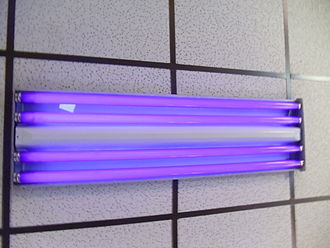
330px-BlackLightBulb4300ppx2
Black light fluorescent tubes. The violet glow of a black light is not the UV light itself, which is not visible to the human eye, but visible light that escapes being filtered out by the filter material in the glass envelope.


One type of lamp has a violet filter material, either on the bulb or in a separate glass filter in the lamp housing, which blocks most visible light and allows through UV, so the lamp has a dim violet glow when operating. Blacklight lamps which have this filter have a lighting industry designation that includes the letters “BLB”. This stands for “blacklight blue”, which is a contradiction in that they are the type that does not look blue.

A second type of lamp produces ultraviolet but does not have the filter material, so it produces more visible light and has a blue color when operating. These tubes are made for use in “bug zapper” insect traps, and are identified by the industry designation “BL”.

But I don’t have a blacklight. So I made my own from the internet (man! I can’t live without the internet). 20170804_15213520170804_152200


Let’s test it by using highlighters.

It worked!

But I found this: Wikipedia says: “Scorpions are also known to glow a vibrant blue-green when exposed to certain wavelengths of ultraviolet light such as that produced by a black light, due to the presence of fluorescent chemicals in the cuticle. One fluorescent component is now known to be beta-carboline. A hand-held UV lamp has long been a standard tool for nocturnal field surveys of these animals. Fluorescence occurs as a result of sclerotisation and increases in intensity with each successive instar. This fluorescence may have an active role in scorpion light detection.”

And I have one! Let’s try it.20170804_152439

I collected this on November 2016. It’s about 12 cm which is quite small.

I wish I have another one to show you how I pinned it.20170804_152505

Nope, it didn’t work. Maybe because the scorpion is dead or I need to use a real black light.

20170804_15251920170804_152526

The next thing I wanted to do is to put the highlighter’s ink in water and I would like to compare it with water.
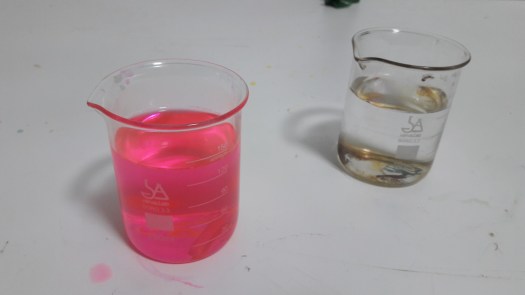
20170804_192501

Let’s do it!20170804_192513

It didn’t work well like I thought but at least it’s glowing nicely. Let’s compare it with the water.20170804_192518
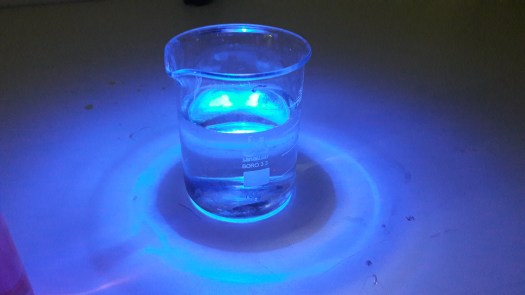
Plain water looks nice too.

Hope you enjoyed this if you did, drop a like on the bottom ↓ 😀

Sources:

https://en.wikipedia.org/wiki/Blacklight

https://en.wikipedia.org/wiki/Scorpion


Burglar Door Alarm

Burglar Door Alarm

The last time I did an alarm that’s under a mat and it received a lot of likes. The link for that is here: How to Make a Burglar Alarm Mat. So today I have another alarm to make, and it involves a door. Make sure to follow the pictures and have fun.

Things you’ll need: String, a bottle cap, 9V battery, a small box, 3 alligator wires, speaker with sound or a piezo buzzer, a paper clip, and tape.

  1. Cut a hole outside of the box.20170701_150211
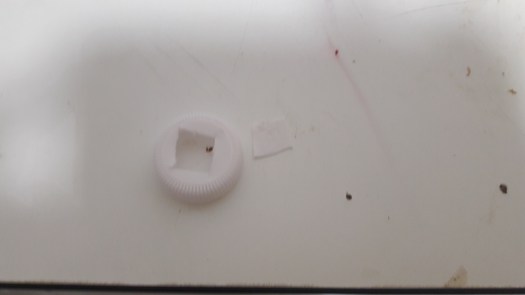
  2. Cut a piece of plastic from a bottle cap.20170701_150741
  3.  Put tape on one “tong” of an alligator clip and leave the other alone as shown in the picture.20170701_151111
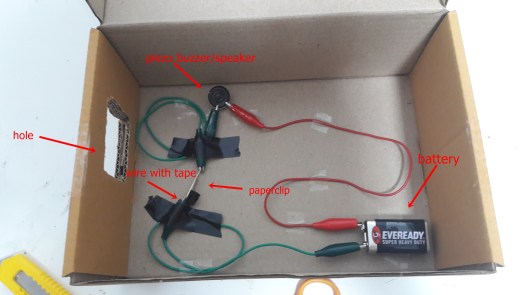
  4. Build a circuit in the box as shown below. Make sure the speaker is working and the alligator clip with tape needs to be next to the hole.20170701_151321
  5. Attach a string to the piece plastic from the bottle cap. Then, put the piece of plastic between the alligator clip and make the string go through the hole.
  6. Make sure you see the circuit from the hole and the string cannot be blocked or tight.
  7. Now the alarm is done. When you pull the string the speaker will be activated.
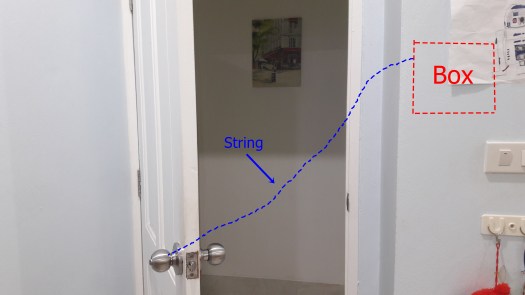
  8. The door needs to pull the string, so find a place that the door knob moves away from the alarm.20170701_151847
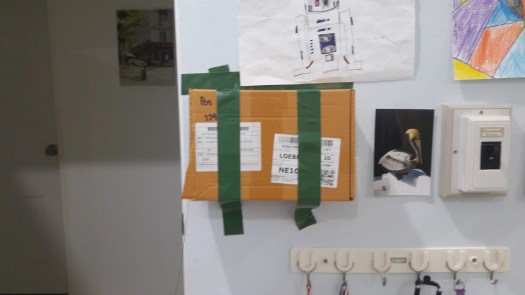
  9. Tape or place the box in the right position.20170701_152559
  10. Tie the string to the door knob.20170701_152701.jpg
  11. Now your alarm is ready. When someone opens the door, the door knob will pull the string, the wire will be connected to the paperclip, and the speaker will be activated.

The reason I put tape on only on “tong” of the alligator clip is because the speaker will be activated when it has the piece of plastic between the first tong. The tape and plastic is an insulator. An electrical insulator is a material whose internal electric charges do not flow freely; very little electric current will flow through it under the influence of an electric field. This contrasts with other materials, semiconductors and conductors, which conduct electric current more easily. The property that distinguishes an insulator is its resistivity; insulators have higher resistivity than semiconductors or conductors.

When the door knob pulls the plastic with the string, the metal will touch and the speaker will be activated.